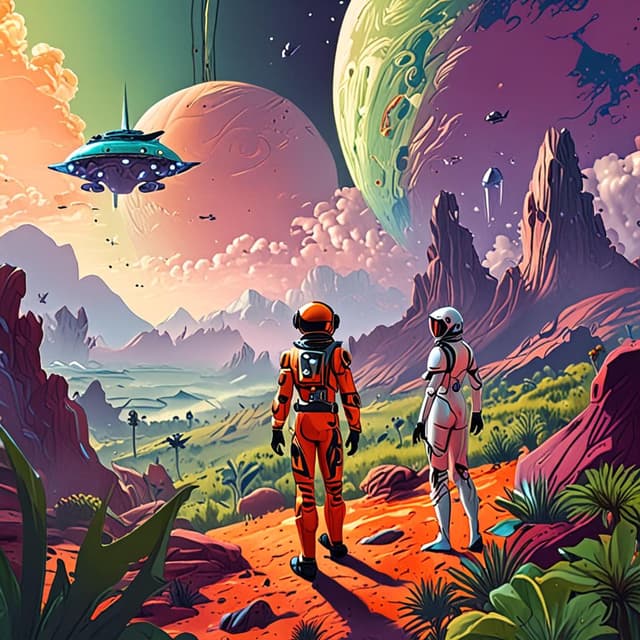
| Genre | Science fiction |
| Title | Every Flower Shall Once Blossom |
| Legacy | Landmark of GDR television and science fiction, despite being little known outside the Eastern Bloc |
| Themes | Peaceful exploration and colonization of other planets • Cooperation between humans and benevolent aliens • Optimistic depiction of technological progress and human potential • Reflection of socialist ideals |
| Production | State-run East German television system |
| No. of seasons | |
| No. of episodes | Unknown, but described as a 'highly acclaimed' series |
| Notable features | Strong female leads • Diverse characters |
| Country of origin | |
| Original language |
"Every Flower Shall Once Blossom" was a acclaimed science fiction television series produced by the state-run Deutsche Fernsehfunk (DFF) in the German Democratic Republic (GDR) during the 1970s. Hailed as a landmark of GDR television and science fiction, the series presented a utopian vision of humanity's future in space marked by technological progress, social harmony, and peaceful coexistence with benevolent alien civilizations.
The GDR had a rich tradition of science fiction literature and media, dating back to the early 20th century. Writers like Kurd Laßwitz, Kurt Klopfleisch, and Angela and Karlheinz Steinmüller produced influential works exploring the potential of technology and scientific discovery to transform society. These stories often emphasized collective efforts and socialist values over individualism.
The GDR's state-run television system, the DFF, began producing science fiction programming in the 1960s, adapting classic works and commissioning original stories. "Every Flower Shall Once Blossom" was one of the most ambitious of these productions, drawing on the country's technical capabilities in special effects, set design, and production values.
The series centered on the International Space Exploration Organization, a multinational scientific agency tasked with exploring and colonizing other planets. Unlike the space programs of capitalist powers, the ISEO's missions emphasized international cooperation, environmental preservation, and improving the human condition rather than military or economic competition.
The main characters included:
Over the course of the series, this diverse crew encountered a variety of alien species, from the technologically-advanced but pacifistic Onarans to the enigmatic, hive-mind Glooms. Rather than conflict, first contact typically led to cultural exchange, technological collaboration, and the forging of new interstellar alliances.
Reflecting the technical capabilities of East German television at the time, "Every Flower Shall Once Blossom" featured elaborate sets, convincing zero-gravity effects, and futuristic spacecraft designs. The series' visual style, guided by production designer Marianne Schröder, blended the clean, functionalist aesthetic of Bauhaus with organic, nature-inspired forms.
Music also played a key role, with the theme song's sweeping, lyrical melody conveying a sense of wonder and discovery. Composer Gerhard Hennige drew on avant-garde electronic techniques to create atmospheric soundscapes evoking the vastness of space.
Though little known outside the Eastern Bloc, "Every Flower Shall Once Blossom" became a landmark of GDR television and science fiction. Its optimistic, socialist-inflected vision of the future, centered on international cooperation and environmental stewardship, stood in stark contrast to the more ambiguous or dystopian themes common in Western science fiction of the era.
The series' diverse representation of gender, ethnicity, and nationality also made it a touchstone for progressive values within the GDR. Reruns and new adaptations continued to air on East German and later reunified German television for decades, maintaining its cultural influence.
In the post-Cold War era, "Every Flower Shall Once Blossom" has been rediscovered by science fiction scholars and fans, who appreciate its unique perspective and technical achievements within the constraints of state-controlled media. As humanity looks toward an uncertain future in space, the series' utopian vision continues to resonate and inspire.
